Sewer Connection Points in Oak Park's Older Homes
Oak Park is a compact inner-north suburb with a high proportion of 1950s and 1960s brick homes. The sewer infrastructure underlying these properties is from the same era — brick-and-mortar inspection openings, clay pipe connections, and original junction points that have had decades of ground movement, root infiltration, and concrete degradation working against them.
The connection point between a property's private drain and the sewer main is often the most vulnerable part of the system. It's where two different pipe systems meet, it's typically the deepest point on the property's side, and it's been buried and forgotten for 60+ years. When this connection fails, the problems can range from chronic blockages that keep coming back to sewage leaching into the surrounding soil.
What This Job Looks Like Underground
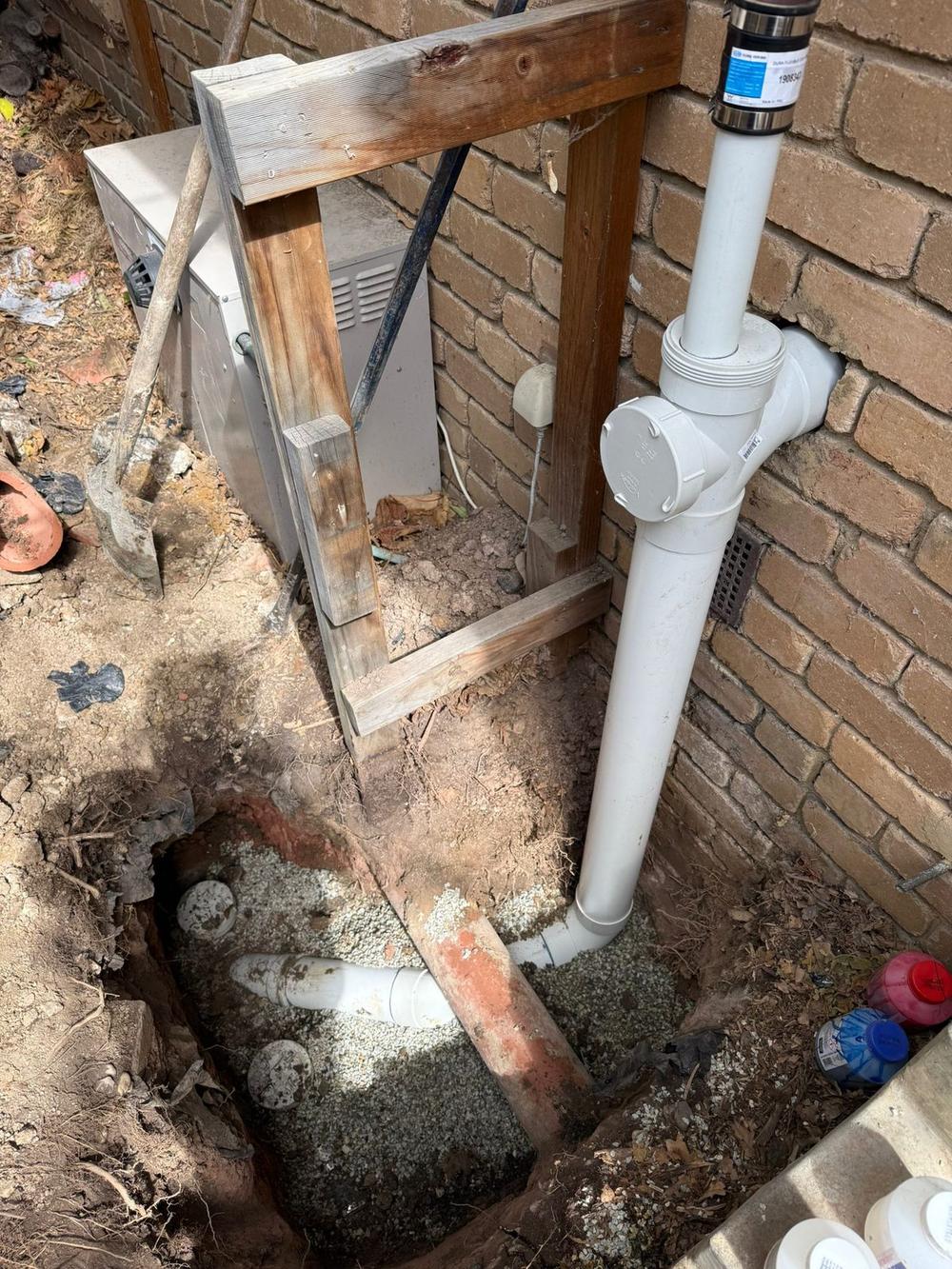
The photo shows a typical sewer connection point repair in progress: a pit has been excavated down to the connection level, with a timber shoring frame installed to hold the trench walls safe. A new white PVC pipe is already in place — running from above down into the pit — and is being connected into the old brick/concrete infrastructure at the base of the excavation.
The depth of this type of pit in Oak Park typically ranges from 800mm to 1.5 metres depending on the property. At these depths, shoring is required under WorkSafe Victoria guidelines — we don't cut corners on this. The timber frame you see in the photo is the correct method for protecting the worker in the excavation.
Oak Park is in the City West Water service area. Sewer work within the property boundary is the owner's responsibility. Any work connecting to or near the City West Water sewer main requires notification and must be completed by a licensed plumber.
Why Sewer Connection Points Fail
- Mortar deterioration: Brick-lined inspection openings have mortar joints that soften over time — roots exploit every gap and crack the structure apart
- Differential ground settlement: The pipe on one side of the connection settles at a different rate to the pipe on the other side, creating an offset joint and a blockage trap
- Tree root invasion: Oak Park has heavily treed streets — fine feeder roots from established trees track moisture and enter at every joint
- Concrete invert failure: The concrete channel at the base of inspection openings deteriorates under acid attack from hydrogen sulphide — the internal surface erodes and catches waste
- Pipe displacement: Ground movement over decades physically shifts the pipe alignment, breaking joints and creating low points that fill with sediment
The Full Repair Sequence
We run a camera through the sewer to confirm the fault location, depth, and extent — and confirm there are no additional problems further down the line.
We mark Dial Before You Dig (DBYD), confirm no services in the dig zone, and excavate carefully to the connection depth with mechanical and hand tools as required.
Timber shoring is installed before anyone enters the pit. No exceptions — this is a safety requirement and we treat it as one.
Old brick/clay connection point is broken out or bypassed. New PVC pipe is connected to the sewer main with the correct coupling, properly bedded on sand, and set to the correct gradient.
The pit is backfilled in layers with compacted fill to prevent future settlement. Surface — concrete path, garden, or soil — is reinstated as closely as possible to original.
Sewer Problem in Oak Park?
We'll camera it first, tell you exactly what's there, and give you a fixed price for the repair before we start digging.