What the Soap Test Actually Shows
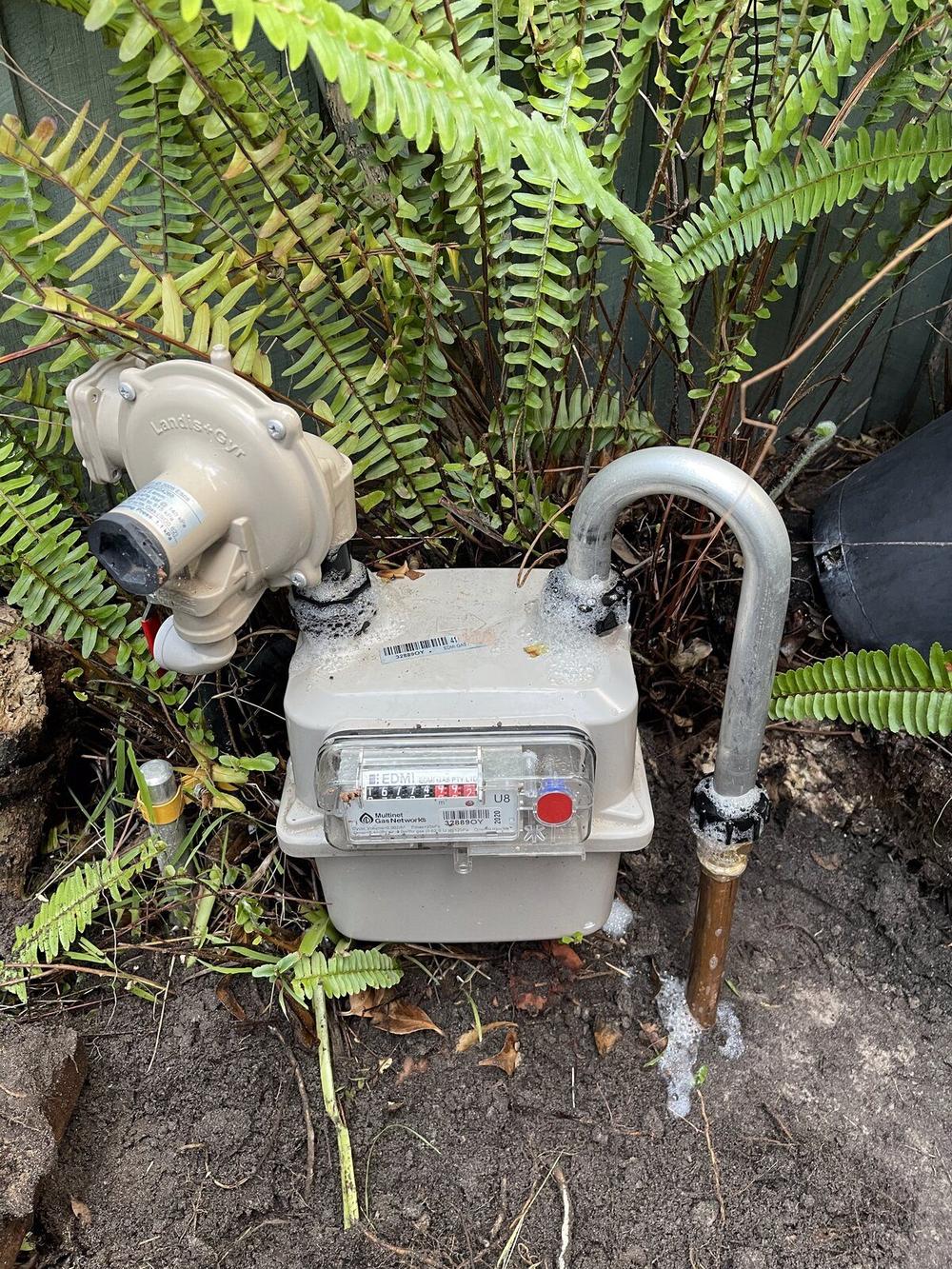
The photo below was taken at a Tullamarine property during a routine gas meter inspection. We applied a soap solution to the fittings on the meter outlet and regulator — and the bubbles that appeared told us exactly where gas was escaping. It's a simple but reliable method that licensed gasfitters use to pinpoint leaks at connections, joints, and valves that are otherwise invisible.
In this case, the leak was at a corroded fitting on the outlet side of the meter. Gas was escaping slowly — not enough to smell strongly from a distance, but enough to be a genuine ignition risk. The homeowner had no idea.
How We Detect Gas Leaks at the Meter
Gas meters have multiple connection points where leaks can develop: the inlet from the distributor's main, the outlet fitting to your internal pipework, the regulator, and any isolation valves fitted nearby. Corrosion, vibration, poor original installation, and age all cause fittings to work loose or degrade over time.
Our process at the meter is straightforward:
- Visual inspection of all fittings, joints, and the regulator body for corrosion, damage, or movement
- Soap solution applied to every connection point — any bubbling indicates escaping gas
- Electronic gas detector used to confirm presence and concentration where needed
- Pressure test on the downstream pipework to check if the leak is at the meter or internal
Don't attempt to tighten fittings yourself. Turn off the gas at the meter isolation valve if it's accessible, leave the property, and call us or 000. Gas leaks at the meter can escalate quickly.
What Happens When We Find a Leak
If the leak is on the customer's side of the meter — the outlet fitting, the internal riser, or any pipework from the meter to your appliances — we can isolate, repair, and pressure test on the same visit. Most meter-side fitting repairs involve replacing the leaking joint or fitting with new brass compression fittings and remaking the connection correctly.
If the leak is on the distributor's side — the inlet to the meter or the meter body itself — we notify Multinet Gas or AusNet Services directly and arrange an emergency attendance. In the meantime we isolate the supply at the meter valve to make the property safe.
Why Meter Fittings Corrode
Melbourne's older properties often have gas meters that were installed decades ago. The steel riser pipes and original brass fittings at these meters are exposed to moisture, soil contact, and temperature cycling year-round. Corrosion works from the outside in — by the time a fitting starts to weep gas, there's usually significant degradation underneath that makes a simple tighten ineffective. Replacement is the right call.
We also see leaks at meters where previous work has been done incorrectly — fittings that were over-tightened and cracked, PTFE tape applied to parallel threads where it doesn't seal, or compression fittings that were assembled without properly deburring the pipe end.
Every gas repair we carry out is done by a licensed gasfitter and backed by a Certificate of Compliance. You receive a copy for your records — required if you ever sell the property.
Signs You May Have a Gas Leak at the Meter
- A faint sulphur or rotten egg smell near the meter box
- A hissing sound from the meter or fittings
- Your gas bill has increased without a change in usage
- Dead or yellowing vegetation directly around the meter (gas displaces oxygen in the soil)
- The gas meter dial moving when all appliances are off
Suspect a Gas Leak? Call Now.
We attend gas leaks across Melbourne same day. Licensed gasfitters, upfront pricing, Certificate of Compliance issued.