Blocked Drain in Reservoir?
Reservoir is one of Melbourne's largest northern suburbs, and a big chunk of its housing stock dates back to the 1950s and 60s. That era of construction means one thing for drainage: clay and concrete sewer lines that have been underground for over 60 years.
When these pipes fail — and they do — it's rarely a simple blockage you can clear with a jet. Tree roots crack the pipe walls, the surrounding soil shifts, and what started as a slow drain becomes a collapsed line that needs to come out entirely.
Lightning Response Plumbing handles full sewer excavations right across Reservoir. We carry the equipment on the truck, we do the dig, and we leave the site restored. No subcontracting, no surprises on the invoice.
Why Reservoir Properties Need More Than a Jet
High-pressure water jetting clears soft blockages — grease, silt, paper. But Reservoir's drainage problems often go deeper:
- Root fracture: Tree roots don't just block pipes, they split them. Once a clay pipe is cracked, jetting the roots out leaves a broken pipe behind — water leaks into the surrounding soil and the problem returns within weeks
- Pipe collapse: Older concrete and clay lines can collapse entirely under the weight of driveways or compacted clay soil. A camera will show this immediately — and it can't be fixed without excavation
- Joint failure: Rubber-jointed clay pipes from the 1950s–70s lose their seal over time. Ground movement pulls joints apart, creating gaps where roots enter and soil can fall in
- Bellying: Sections of pipe that sag due to ground movement collect water and debris, causing recurring blockages that no amount of jetting will permanently fix
Reservoir is serviced by City West Water for sewerage. Any works connecting to or near the sewer main require compliance with their guidelines. We handle all required documentation and can arrange any necessary permits on your behalf.
How We Handle a Sewer Dig-Up in Reservoir
We've done this across hundreds of Melbourne properties. Here's exactly what the process looks like:
Before anything goes in the ground, a camera goes down the drain. We locate the exact fault, measure the depth, and confirm the pipe material — so the quote is accurate and there are no surprises once we start digging.
We check for gas, electrical, and water lines before breaking ground. This step is non-negotiable — it's both a safety requirement and our responsibility as licensed plumbers.
We dig to the faulty section — typically 600mm to 1.5m deep in Reservoir. The trench is cut cleanly, minimising the footprint on your garden or driveway. We shore up trench walls where required.
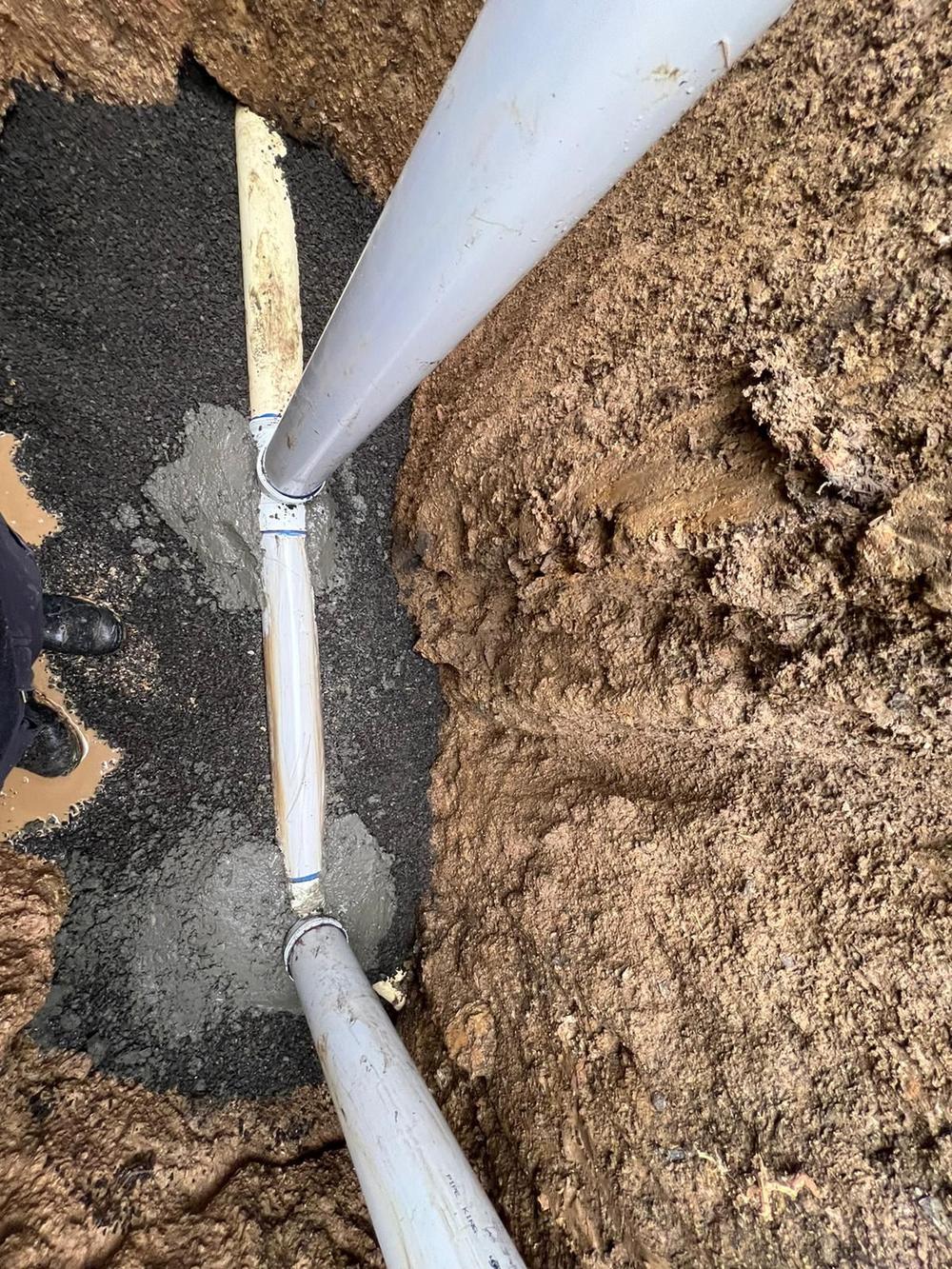
The damaged section is cut out and replaced with new PVC, bedded and graded correctly. PVC is the modern standard — it's smooth, root-resistant, and rated for decades of service.
Before we backfill, the camera goes down again to confirm the new pipe is seated and flowing correctly. Then we compact the backfill in layers and restore the surface as close to original as possible.
Signs You Might Need a Sewer Dig-Up
Most Reservoir homeowners don't know a pipe has failed until the problem becomes urgent. Watch for these warning signs:
- Recurring blocked drains that clear temporarily but come back within weeks
- Gurgling noises from multiple drains at once
- Sewage smell outside in the yard or under the house
- Soft or sunken patches in the lawn (a sign of a leaking sewer underground)
- Unusually lush grass growing in a line across the yard — that's your sewer feeding the soil
- Slow drains across the whole house, not just one fixture
Can Pipe Relining Avoid the Dig?
Sometimes, yes. Pipe relining involves inserting a resin liner inside the existing pipe and curing it in place — creating a new pipe within the old one, without excavation. It's a great solution where the pipe is cracked but structurally intact.
But relining has limits. Collapsed pipes, severely offset joints, and pipes with missing sections can't be relined — they need to come out. That's why CCTV inspection comes first every time. We'll tell you honestly whether relining is an option, or whether excavation is the only way to properly fix it.
Need a Blocked Drain in Reservoir?
Call us for a fixed-price quote — CCTV inspection included, available 24/7.